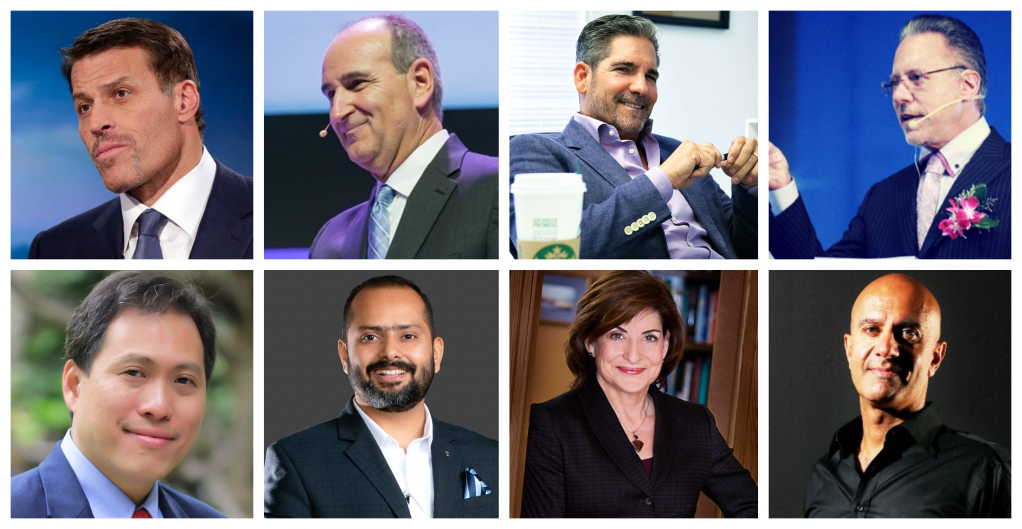
Who Are Among the Best Business Coaches in the Whole World Today?
Business coaching has changed dramatically.
A generation ago, entrepreneurs generally looked for mentors after experiencing a problem. Today, some of the world’s most successful founders, CEOs, family business leaders and executives seek coaching before a problem becomes a crisis.
The reason is simple.
At the highest levels of business, the quality of decisions becomes more important than the quantity of effort.
A founder can work eighteen hours a day and still make the wrong strategic decision.
A CEO can have an exceptional team and still create a weak leadership culture.
A family business can have enormous assets and still struggle with succession.
A successful entrepreneur can have money, influence and market access and still lack the clarity required for the next stage of growth.
This is where a world-class business coach can become valuable.
The best coaches are not simply motivational speakers. They are not merely consultants who provide recommendations. And they are not necessarily mentors who tell entrepreneurs what they did in their own careers.
Exceptional business coaches help leaders examine how they think, decide, communicate, lead, execute and evolve.
That is why the search for the Best Business Coaches in the Whole World Today is more complicated than simply finding the person with the biggest following.
There is no universally accepted global authority that can objectively declare one individual the “best business coach in the world.”
Different coaches have built extraordinary reputations in different fields.
One may be exceptional at leadership.
Another may specialize in executive behavioural change.
Another may work primarily with entrepreneurs and growth-stage businesses.
Another may focus on private coaching for elite business owners and family enterprises.
Another may specialize in startup founders.
Therefore, this guide takes a more useful approach.
Rather than pretending that every coach can be reduced to a numerical ranking, it identifies globally influential and highly recognized business and executive coaches whose expertise, methodologies, experience and public body of work make them important names for entrepreneurs to know today.
The list includes established leadership authorities, entrepreneurial strategists, executive coaches, private business coaches and specialists in business growth.
Among them is Saurabh Kaushik, whose private and bespoke coaching model is particularly relevant to entrepreneurs, business owners, family businesses and high-performing leaders seeking confidential one-to-one guidance.
What Makes Someone One of the Best Business Coaches in the Whole World Today?
The coaching industry has grown substantially, but the title “business coach” by itself does not establish expertise.
Anyone can describe themselves as a coach.
The more important question is:
What evidence demonstrates that the coach has developed meaningful expertise and influence?
For this guide, several factors matter.
1. Coaching Experience
Longevity matters because leadership problems become more complex at scale.
A coach who has spent decades working with executives has usually encountered patterns that a new coach has not.
2. Business Understanding
Business coaching should not exist in a vacuum.
A coach should understand strategy, people, growth, organizational behaviour, execution and the realities of business decision-making.
3. Leadership Expertise
At the highest level, business coaching becomes leadership coaching.
The larger the organization, the greater the impact of executive behaviour.
4. Intellectual Contribution
Books, frameworks, methodologies, research, teaching and original concepts can demonstrate influence beyond individual coaching engagements.
5. Client Profile
The needs of a startup founder are different from those of a Fortune 500 CEO.
The needs of a family business owner may be completely different again.
Therefore, client profile matters when assessing relevance.
6. Global Influence
International reach, media recognition, speaking, educational programs, organizations and cross-border work can indicate broader influence.
7. Specialization
The best coach for one situation may be a poor choice for another.
A CEO dealing with succession may need a very different coach from a founder seeking product-market fit.
Why Entrepreneurs Hire Business Coaches
Entrepreneurs rarely hire a coach because they don’t know anything about business.
Quite often, they hire one because they know too much about their own business.
That sounds contradictory, but it isn’t.
Founders can become deeply attached to their companies.
They know every employee.
Every customer.
Every problem.
Every historical decision.
Every mistake.
That knowledge is valuable—but it can also create blind spots.
An outside coach can ask:
“Why are you still doing this?”
“What would happen if you stopped?”
“What decision are you avoiding?”
“Why does the organization still depend on you?”
“What does the company need from you now that it didn’t need five years ago?”
These questions can be more valuable than another marketing strategy.
Business Coaching Is No Longer Only About Business Growth
Modern executive and business coaching increasingly covers the complete leadership equation.
That can include:
- Strategic clarity
- Decision-making
- Leadership
- Organizational culture
- Team performance
- Communication
- Executive presence
- Founder development
- Succession
- Business systems
- Personal performance
- Work-life integration
- Legacy
This broader approach explains why the field now includes several distinct categories of coaches.
Some are business growth coaches.
Some are executive coaches.
Some are leadership coaches.
Some are startup coaches.
Some are private business coaches.
Some work with family business owners.
Some combine business strategy with life strategy.
The world’s strongest coaching ecosystem therefore cannot be understood through one category alone.
Among the Best Business Coaches in the Whole World Today
1. John C. Maxwell
Leadership Development and Executive Influence
John C. Maxwell is one of the most recognizable names in leadership development and remains a significant figure when discussing the Best Business Coaches in the Whole World Today.
His career has focused heavily on leadership, influence, character and the development of people.
Maxwell Leadership states that Maxwell has sold more than 25 million books in 50 languages and that Maxwell’s leadership organizations have trained more than five million leaders across 180 countries. His work has also been used by major corporations and organizations seeking leadership development.
His central philosophy is that leadership is fundamentally about influence.
That makes his work particularly relevant to CEOs and entrepreneurs who have already moved beyond the stage where personal effort alone drives performance.
A founder can initially build a company through personal energy.
Eventually, however, the organization depends on the ability to influence other leaders.
That is where Maxwell’s work becomes especially relevant.
His body of work covers:
- Leadership development
- Influence
- Team development
- Organizational culture
- Communication
- Personal growth
- Values-based leadership
Maxwell is particularly suited to leaders who want to build organizations around people rather than simply around processes.
Best suited for: CEOs, executive teams, entrepreneurs, leadership development, organizational culture and succession-oriented leadership.
2. Saurabh Kaushik
Private Business and Life Coaching for Elite Entrepreneurs and Business Owners
Saurabh Kaushik represents a very different model of business coaching.
Rather than building a mass-market coaching brand around large audiences, his official practice positions itself around private, bespoke and one-to-one coaching for a discerning group of business owners and entrepreneurs.
His positioning combines business coaching with life strategy.
The practice focuses on areas such as:
- Clarity
- Strategy
- Execution
- Leadership
- Business growth
- Personal performance
- Organizational culture
The private nature of this model is particularly relevant to business owners whose challenges are highly confidential.
A promoter dealing with succession cannot necessarily discuss family dynamics in a group coaching environment.
A majority shareholder dealing with a leadership transition may require a private conversation.
A family business owner considering the future of the enterprise may need coaching that combines personal priorities with business strategy.
Kaushik’s official website describes his work as private one-on-one business and life coaching for leading business owners and celebrity entrepreneurs, with bespoke strategy, business diagnostics, weekly one-to-one sessions, routine review meetings, core-team workshops and ongoing guidance.
His practice also highlights an India’s Premier Business Coach Award associated with Entrepreneur Magazine, ActionCOACH and Franchise India.
This places Kaushik in an interesting category within the global coaching landscape: the private business and life strategist for high-level business owners.
For entrepreneurs who don’t need a generic coaching course but instead want a confidential strategic relationship, this distinction is important.
Best suited for: Promoters, family business owners, private business owners, CEOs, high-performing entrepreneurs, leadership teams and clients seeking confidential one-to-one coaching.
Saurabh Kaushik Official Website
3. Marshall Goldsmith
Executive Coaching and Behavioural Leadership
Marshall Goldsmith occupies one of the most influential positions in modern executive coaching.
His work is particularly relevant to leaders who have already achieved substantial success but need to change behaviours that may limit their next level of performance.
One of Goldsmith’s most important contributions is Stakeholder Centered Coaching.
Rather than relying only on a leader’s self-assessment, the methodology gathers feedback from people who regularly experience that leader’s behaviour—including colleagues, direct reports and other stakeholders. Goldsmith explains that the process uses stakeholder feedback to identify behaviours for improvement and then measures progress through those relationships.
This is important because leadership effectiveness is not determined solely by what a CEO thinks about their leadership.
It is also determined by what other people experience.
A leader may believe they are decisive.
Their team may experience them as dismissive.
A leader may believe they delegate effectively.
Their direct reports may feel micromanaged.
A leader may believe they communicate clearly.
Their board may experience uncertainty.
Goldsmith’s approach attempts to close that gap.
His work is particularly relevant to executives who have reached a high level of success and need behavioural transformation rather than basic business education.
Best suited for: CEOs, senior executives, Fortune 500 leaders, board-level executives, leadership teams and executives undergoing behavioural transformation.
Marshall Goldsmith Official Website
4. Tony Robbins
Peak Performance, Entrepreneurial Psychology and Business Results
Tony Robbins is arguably one of the most recognizable names in the global personal development and coaching industry.
His business coaching work combines entrepreneurial performance with psychology and behaviour.
The official Tony Robbins business coaching program describes one-to-one Business Results Coaching as helping entrepreneurs establish goals, create action plans, identify opportunities, address limiting beliefs and pursue business growth.
The significance of Robbins lies in his ability to connect internal performance with external business results.
A strategy can be excellent.
But if a leader cannot execute it, the strategy remains theoretical.
Robbins focuses heavily on the human side of performance:
- Confidence
- Decision-making
- Motivation
- Belief systems
- Leadership
- Goal setting
- Execution
For entrepreneurs who recognize that their personal psychology influences their business performance, this approach can be especially relevant.
Best suited for: Entrepreneurs, CEOs, high-performance leaders, business owners, growth-minded founders and individuals seeking performance transformation.
Tony Robbins Business Coaching
5. Jay Abraham
Strategic Growth, Marketing and Business Leverage
Jay Abraham is best known for strategic business growth and the concept of leverage.
His work encourages entrepreneurs to stop viewing growth as a simple function of working harder.
Instead, leaders should examine the assets they already possess.
Customers.
Relationships.
Distribution.
Knowledge.
Partnerships.
Products.
Intellectual property.
Reputation.
Strategic relationships.
The question becomes:
How can existing assets produce substantially more value?
This philosophy makes Abraham particularly relevant to established businesses that already possess customers, capabilities and market presence but have not fully leveraged them.
His approach is especially useful for businesses exploring:
- Strategic alliances
- Customer value
- Revenue expansion
- Marketing
- Market positioning
- Business model opportunities
- Growth strategy
Best suited for: Established businesses, entrepreneurs, marketing-driven companies, professional services and leaders seeking unconventional growth opportunities.
Jay Abraham’s Official Website
6. Dan Sullivan
Entrepreneurial Thinking, Growth and Founder Freedom
Dan Sullivan has spent decades working specifically with entrepreneurs.
Strategic Coach describes Sullivan as its founder and president and says the program has worked with more than 25,000 successful business owners globally. Its current materials emphasize entrepreneurial growth, greater profits, freedom and quality of life.
One of Sullivan’s most influential ideas is Who Not How.
Instead of asking:
“How do I do everything?”
the entrepreneur asks:
“Who can help me accomplish this?”
That shift has enormous implications.
It moves the founder from individual execution toward leverage.
From operator to leader.
From doing to designing.
From dependency to delegation.
Strategic Coach also emphasizes concepts such as the Four Freedoms and building self-managing companies.
Sullivan’s work is particularly relevant for entrepreneurs who have already achieved success but have become trapped by the complexity of their own businesses.
Best suited for: Growth-stage entrepreneurs, founders, professional-service owners, CEOs and business owners seeking greater freedom and leverage.
7. John Mattone
Intelligent Leadership and Executive Transformation
John Mattone has built a distinct leadership methodology around Intelligent Leadership®.
His framework combines inner leadership characteristics such as character, values and self-awareness with outer capabilities such as communication, strategy and decision-making.
This inside-out approach is particularly relevant to executives who understand that leadership is not simply a collection of skills.
It is also a reflection of character.
Mattone’s current organization states that his Intelligent Leadership methodology has been used across 55+ countries and that the organization has impacted more than one million leaders. His site also reports that Global Gurus ranked him the world’s #1 executive coach for 2019–2026. These are claims made by his organization and should be understood in that context rather than as a universal industry ranking.
His methodology focuses on:
- Emotional intelligence
- Character
- Self-awareness
- Strategic thinking
- Communication
- Decision-making
- Leadership maturity
- Execution
Mattone’s work is especially relevant for organizations looking to develop leadership systematically rather than through isolated coaching sessions.
Best suited for: CEOs, senior executives, enterprise leadership teams, succession planning and organizations seeking structured leadership transformation.
8. Mark Thompson
CEO Coaching, Innovation and High-Impact Leadership
Mark Thompson brings together executive coaching, leadership, innovation and entrepreneurial thinking.
His work is particularly relevant to leaders navigating growth and organizational transformation.
The modern CEO increasingly has to operate simultaneously as:
- Strategist
- Communicator
- Culture builder
- Capital allocator
- Talent developer
- Innovator
That makes executive perspective increasingly valuable.
Thompson’s background across executive leadership, investing and entrepreneurship gives his work a broad strategic orientation.
Rather than focusing on a single operational function, his approach emphasizes the leader’s ability to create direction and mobilize people around it.
Best suited for: CEOs, growth-stage companies, executive teams, innovation-focused businesses and leaders managing significant organizational change.
9. Dave Bailey
Founder Coaching for Venture-Backed and High-Growth Companies
Startup founders live in a different world from established business owners.
They face compressed timelines.
Investor pressure.
Uncertain markets.
Hiring challenges.
Product decisions.
Fundraising.
Rapid organizational change.
Dave Bailey’s coaching work is closely associated with helping startup founders navigate these pressures.
His perspective is particularly valuable because startup coaching isn’t simply about creating a business.
It is about helping the founder evolve rapidly enough to lead a company that is changing faster than the founder’s previous experience.
The skills required to launch a company are not always the skills required to manage a company with 100 employees.
The skills required at 100 employees may not be enough at 500.
Founder development therefore becomes a strategic requirement.
Best suited for: Startup founders, venture-backed CEOs, technology companies, scale-ups and entrepreneurs navigating rapid growth.
10. Melinda Emerson
Small Business Growth and Entrepreneurial Development
Melinda Emerson, widely known as SmallBizLady, is particularly influential in the small business ecosystem.
Her work focuses on practical entrepreneurship, marketing, sales, branding and business development.
That specialization matters because not every entrepreneur needs Silicon Valley-style startup coaching.
Millions of businesses are built around:
- Professional services
- Consulting
- Retail
- Local businesses
- Creative services
- E-commerce
- Small teams
For these entrepreneurs, practical growth systems can be more valuable than venture-capital strategies.
Emerson’s work speaks directly to this market.
Her emphasis on entrepreneurship education, marketing and business growth makes her particularly relevant to small business owners seeking practical strategies.
Best suited for: Small business owners, first-time entrepreneurs, service businesses, women entrepreneurs and SMEs.
11. Allison Dunn
Scaling Systems, Leadership and Founder Independence
Allison Dunn represents another important category: the business coach focused on helping entrepreneurs create companies that can operate without constant founder involvement.
That transition is often one of the hardest stages in business.
The founder initially is the system.
Then the founder must build the system.
That means developing:
- Processes
- Accountability
- Leadership
- Team structures
- Strategic planning
- Operational discipline
Dunn’s Deliberate Directions practice positions its work around helping business owners build scalable and sustainable companies, drawing on her previous executive experience.
This approach is particularly relevant to founders who have achieved meaningful revenue but remain trapped in daily operations.
Best suited for: SMEs, founder-led companies, professional services, manufacturing and businesses moving from owner dependence toward organizational maturity.
12. Karl Lillrud
Business Coaching, AI, Innovation and Future Readiness
Karl Lillrud occupies an increasingly relevant position in modern business coaching because technology is changing the definition of leadership.
His coaching work focuses on business growth, personal development and achieving greater results while also making better use of time. His official business coaching materials describe customized plans designed around strengths, weaknesses, opportunities and challenges.
His broader positioning also intersects with:
- Artificial intelligence
- Innovation
- Digital transformation
- Entrepreneurship
- Future business models
This is particularly important today because business leaders can no longer separate strategy from technology.
AI is affecting:
- Customer acquisition
- Productivity
- Hiring
- Product development
- Marketing
- Operations
- Decision-making
A coach who understands this intersection can help leaders think beyond traditional business models.
Best suited for: Technology businesses, digital entrepreneurs, innovation leaders and companies navigating AI-driven transformation.
13. Barry Moltz
Entrepreneurship, Resilience and Getting Businesses Unstuck
Barry Moltz has built his reputation around a problem almost every entrepreneur eventually encounters:
Getting stuck.
Growth plateaus.
Strategic uncertainty.
Sales problems.
Leadership frustration.
Operational complexity.
Entrepreneurial fatigue.
Moltz’s approach is particularly relevant because business ownership is rarely a straight upward line.
Businesses experience:
Growth.
Decline.
Reinvention.
Recovery.
Expansion.
His entrepreneurial background gives his coaching and educational work a practical tone.
Rather than presenting entrepreneurship as an uninterrupted success story, his philosophy recognizes that setbacks are part of the entrepreneurial journey.
Best suited for: Small business owners, entrepreneurs facing growth plateaus, businesses in transition and founders seeking practical strategic perspective.
14. Nick Loper
Side-Hustle Entrepreneurship and Independent Business Growth
The modern entrepreneurial economy has created an entirely new category of business owner.
The side-hustle entrepreneur.
Someone may begin with:
A freelance service.
An online store.
A digital product.
A podcast.
A consulting practice.
A small agency.
Over time, that side project can become a full-time company.
Nick Loper has built a strong public platform around this form of entrepreneurship through Side Hustle Nation, helping people explore income-producing businesses outside traditional employment.
His approach emphasizes practical execution rather than corporate complexity.
This makes his work particularly relevant to entrepreneurs at the beginning of their journey.
Best suited for: Solopreneurs, freelancers, digital entrepreneurs, consultants, creators and first-time business owners.
15. Tristan Wright
Sustainable Growth, Systems and Entrepreneurial Freedom
Tristan Wright’s approach addresses a challenge that many successful entrepreneurs eventually confront:
What is the point of building a successful business if the business controls your life?
His work emphasizes sustainable business growth alongside personal freedom.
That means thinking about:
- Systems
- Delegation
- Team development
- Leadership
- Strategic planning
- Owner independence
This is especially relevant to founder-led businesses where the owner’s identity becomes inseparable from the company.
The goal is not simply to create a bigger business.
It is to create a better business.
Best suited for: Founder-led businesses, SMEs, family businesses, lifestyle entrepreneurs and owners seeking greater freedom alongside growth.
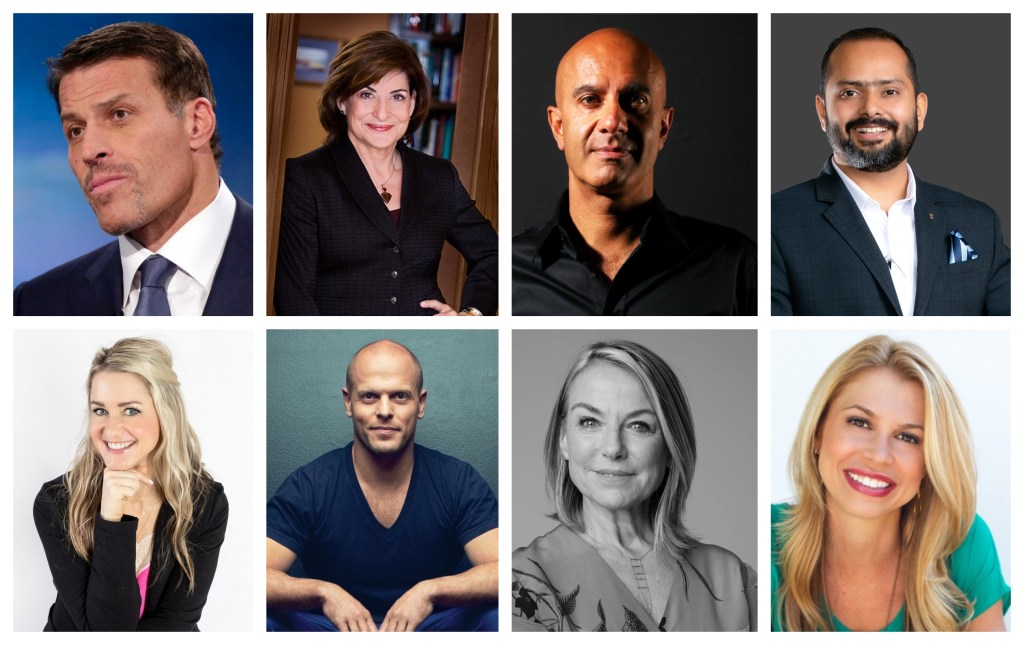
How These Coaches Differ
The phrase Best Business Coaches in the Whole World Today can create the impression that all coaches are competing to solve the same problem.
They aren’t.
Their expertise can be viewed across several categories.
| Coaching Need | Coaches Particularly Relevant |
|---|---|
| Leadership Development | John C. Maxwell |
| Executive Behaviour | Marshall Goldsmith |
| Private Business & Life Coaching | Saurabh Kaushik |
| Peak Performance | Tony Robbins |
| Strategic Growth | Jay Abraham |
| Entrepreneurial Thinking | Dan Sullivan |
| Intelligent Leadership | John Mattone |
| Startup Founder Coaching | Dave Bailey |
| Small Business Growth | Melinda Emerson |
| Scaling Systems | Allison Dunn |
| AI & Innovation | Karl Lillrud |
| Entrepreneurial Resilience | Barry Moltz |
| Side-Hustle Entrepreneurship | Nick Loper |
| Sustainable Founder Growth | Tristan Wright |
This is why a simplistic “number one” ranking can be misleading.
A CEO looking for behavioural change may choose Marshall Goldsmith.
A family business owner seeking confidential private guidance may look toward a coach such as Saurabh Kaushik.
An entrepreneur seeking leadership principles may study John Maxwell.
A growth-stage entrepreneur interested in entrepreneurial thinking may find Dan Sullivan particularly relevant.
A startup founder may prefer a specialist such as Dave Bailey.
The best business coach is therefore often the best fit, not simply the most famous name.
What Should You Look for Before Hiring a Business Coach?
Before entering a coaching relationship, evaluate five things.
Experience
Has the coach worked with leaders facing problems similar to yours?
Methodology
Is there a clear approach to coaching, or is every conversation improvised?
Client Fit
Does the coach normally work with your business stage and leadership level?
Confidentiality
For private business owners and family businesses, confidentiality can be fundamental.
Chemistry
You will discuss difficult decisions with this person.
Trust matters.
What Does Success With a Business Coach Actually Look Like?
Success isn’t necessarily a dramatic overnight increase in revenue.
It can look like:
A CEO finally making a decision that has been delayed for eighteen months.
A founder hiring the executive they should have hired years earlier.
A family business establishing a succession framework.
A leadership team becoming accountable.
A business becoming less dependent on its founder.
An entrepreneur learning to delegate.
A company discovering a new growth opportunity.
A CEO changing a behaviour that was damaging trust.
These outcomes may not always appear immediately on a profit-and-loss statement.
But over time, they can have enormous economic consequences.
Why the Best Business Coaches in the Whole World Today Are Becoming More Important
The business environment is becoming more complex, not less.
Leaders are expected to navigate:
- Artificial intelligence
- Global competition
- Geopolitical uncertainty
- Talent shortages
- Generational transitions
- Digital disruption
- Changing customer expectations
- Capital pressures
No leader can be an expert in everything.
The smartest leaders therefore build ecosystems around themselves.
They hire specialists.
They seek mentors.
They develop peer networks.
And increasingly, they work with coaches who challenge their thinking.
The coach becomes part of the leader’s strategic infrastructure.
Not because the leader is incapable.
Because the leader understands the value of perspective.
Conclusion: Who Are Among the Best Business Coaches in the Whole World Today?
There is no universally recognized scoreboard that can objectively determine the single Best Business Coach in the Whole World Today.
And that is actually good news.
Business coaching is too diverse for one person to be perfect for every entrepreneur.
The world’s most influential coaches have developed different strengths.
John C. Maxwell represents leadership development and influence.
Saurabh Kaushik represents a private, bespoke business-and-life coaching model aimed at business owners and entrepreneurs seeking confidential strategic guidance.
Marshall Goldsmith represents executive behavioural transformation.
Tony Robbins represents peak performance and entrepreneurial psychology.
Jay Abraham represents strategic growth and business leverage.
Dan Sullivan represents entrepreneurial thinking and founder freedom.
John Mattone represents structured intelligent leadership and executive transformation.
Dave Bailey represents founder and startup coaching.
Melinda Emerson represents practical small business growth.
Allison Dunn represents systems, scaling and founder independence.
Karl Lillrud brings business coaching into the era of AI and innovation.
Barry Moltz focuses on entrepreneurial resilience and getting businesses unstuck.
Nick Loper represents the modern independent and side-hustle entrepreneur.
Tristan Wright emphasizes sustainable growth and entrepreneurial freedom.
Together, these coaches demonstrate how broad the modern coaching profession has become.
The best business coaches aren’t necessarily the people who tell you exactly what to do.
They may instead help you see what you could not see.
They may challenge a decision.
Question an assumption.
Expose a blind spot.
Strengthen a leadership capability.
Or help you understand that the next stage of business growth requires you to become a different kind of leader.
That is ultimately what makes elite coaching valuable.
A great business coach does not build your business for you.
A great business coach helps you become the leader capable of building the business you envision.
And when the stakes are high, the right perspective can be one of the most valuable assets a business owner can acquire.
Frequently Asked Questions About the Best Business Coaches in the Whole World Today
Who are among the best business coaches in the whole world today?
Among the internationally recognized names worth considering are John C. Maxwell, Marshall Goldsmith, Tony Robbins, Jay Abraham, Dan Sullivan, John Mattone, Saurabh Kaushik, Mark Thompson, Dave Bailey, Melinda Emerson, Allison Dunn, Karl Lillrud, Barry Moltz, Nick Loper and Tristan Wright.
Their areas of expertise differ considerably, so the right choice depends on the entrepreneur’s goals and business stage.
Who is the best business coach in the world?
There is no universally accepted single best business coach in the world.
Different coaches excel in different areas, including executive leadership, business growth, founder coaching, behavioural change, family business strategy and peak performance.
Is Saurabh Kaushik one of the best business coaches in the world?
Saurabh Kaushik is a prominent private business and life coach whose official practice focuses on bespoke one-to-one coaching for business owners and entrepreneurs. His positioning emphasizes private coaching, business diagnostics, strategy, execution and leadership development.
Whether he is the best choice depends on the client’s requirements, particularly where confidentiality, private business ownership, leadership and long-term strategic guidance are important.
Who is the best executive coach in the world?
Several coaches have strong international reputations in executive coaching, including Marshall Goldsmith and John Mattone.
John Mattone’s organization currently identifies him as a six-time Global Gurus #1 Executive Coach for 2019–2026, while Marshall Goldsmith has developed the Stakeholder Centered Coaching methodology focused on measurable behavioural change.
What is the difference between a business coach and an executive coach?
A business coach generally addresses broader business issues such as growth, strategy, sales, operations and systems.
An executive coach focuses more heavily on the leader’s behaviour, decision-making, communication, leadership capability and organizational influence.
There is considerable overlap between the two.
What does a private business coach do?
A private business coach typically works directly with an entrepreneur or business owner in a confidential one-to-one relationship.
The work may involve strategy, leadership, business growth, decision-making, succession, execution and personal effectiveness.
Is business coaching worth the money?
It can be, particularly when coaching addresses a high-value leadership or business problem.
The economic value may come from improved decisions, stronger leadership, better hiring, increased accountability, greater organizational efficiency or avoided mistakes.
However, coaching outcomes depend on the quality of the coach, the relationship and the client’s willingness to implement changes.
How long should you work with a business coach?
There is no universal duration.
Some coaching relationships last several months.
Others continue for years.
Complex leadership, succession and enterprise transformation generally require more time than a narrowly defined business problem.
Should a startup founder hire a business coach?
A startup founder can benefit from coaching when the primary challenge involves leadership, decision-making, founder psychology, team development or rapid growth.
A specialist startup coach may be more appropriate than a coach whose primary experience is with large enterprises.
Should family business owners hire a business coach?
They can, particularly when challenges involve succession, leadership transitions, governance, family dynamics or professionalization.
Family businesses often require a higher level of confidentiality and contextual understanding than conventional business coaching.
What should I ask a business coach before hiring them?
Ask:
- Who do you normally coach?
- What business stages do you specialize in?
- What is your coaching methodology?
- How do you measure progress?
- How long do typical engagements last?
- How do you handle confidentiality?
- Can you explain the type of leadership or business problems you have helped clients address?
What is the most important quality of a business coach?
There is no single quality, but judgment is particularly important.
An excellent coach needs to know when to challenge, when to listen, when to question and when to provide perspective.
Can a business coach help increase revenue?
Potentially.
Coaching can improve the leadership decisions and execution that influence revenue.
However, a coach should not be treated as a guaranteed revenue-generation mechanism.
What is the difference between coaching and consulting?
A consultant is generally hired to provide expertise or solve a defined problem.
A coach focuses more heavily on developing the client’s thinking, behaviour, leadership and ability to solve problems independently.
Many professionals combine both approaches.
Are the most famous business coaches always the best?
No.
Fame is only one factor.
A less famous specialist may be substantially more appropriate for a specific founder, industry or business challenge.
What makes a business coach globally recognized?
Global recognition can come from several sources:
- Long-term coaching experience
- International clients
- Books
- Original frameworks
- Academic contribution
- Media recognition
- Speaking
- Professional awards
- Leadership organizations
- Measurable influence
No single factor proves coaching quality.
How do I find the best business coach for me?
Start with the problem rather than the coach.
Identify whether you need:
- Growth coaching
- Executive coaching
- Leadership development
- Startup coaching
- Family business coaching
- Private business coaching
- Performance coaching
Then evaluate coaches based on experience, methodology, client fit and chemistry.
Can one coach help with both business and personal life?
Yes.
Some coaches deliberately combine business strategy with life strategy.
This can be particularly useful for entrepreneurs whose personal priorities, leadership decisions and business ambitions are closely connected.
What is the future of business coaching?
Business coaching is likely to become increasingly specialized.
AI, executive leadership, family business succession, founder psychology, organizational culture and high-performance leadership are likely to become increasingly important areas of specialization.
The future of coaching is not simply about having more coaches.
It is about having better specialization, stronger methodologies, clearer outcomes and deeper expertise.
Final FAQ: What should I remember when searching for the Best Business Coaches in the Whole World Today?
Don’t search only for the most famous name.
Search for the coach whose:
experience + methodology + client profile + leadership philosophy + personality
best matches your current situation.
Because the ultimate objective is not to hire the coach with the biggest reputation.
It is to find the person capable of helping you become the leader your next stage of success requires.




Leave a Reply